
Environmental Monitoring for Landfills and Waste Facilities
Bettair can continuously monitor H2S, NH3 and other configured parameters alongside particles, noise and environmental variables. Distributed nodes provide time-linked information that can be compared with wind direction and speed to investigate odor-related episodes, identify recurring patterns and support environmental management teams when responding to complaints or assessing corrective measures.
Environmental Monitoring Challenges in Landfills & Waste Management
Waste facilities can generate recurring odor complaints associated with H2S, NH3 and other gases, while particles, methane, noise and changing meteorology add context. Intermittent measurements may miss short episodes and make source investigation difficult. Environmental managers need continuous, time-linked evidence to understand events, respond to complaints and assess proper conditions.
Foul odor complaints trigger angry calls to town hall before your morning crew even begins. Hydrogen sulfide and ammonia plumes drift past facility boundaries during overnight thermal shifts. Walking the perimeter with handheld sniffers hours later proves absolutely nothing. You remain guilty by default. Bettair rings your site perimeter with continuous sensing to verify true source origin.
Changing environmental conditions
Environmental conditions can vary by activity, location and meteorology, making isolated measurements difficult to interpret.
Complex operational environments
Landfills & Waste Management sites can contain multiple sources, receptors and operating conditions that require distributed visibility.
Need for continuous evidence
Time-linked data helps investigate episodes, compare locations and support environmental management with traceable evidence.
What to Monitor
Configure the monitoring network around the environmental objectives of the landfills & waste management project.
1
Particulate Matter
PM1, PM2.5 and PM10 measurements provide continuous visibility into particulate conditions around waste facilities, operational areas and perimeter locations.
2
Gases & Emissions
Configurable measurements of H₂S, NH₃, CH₄ and other relevant gases can help investigate changing environmental conditions and support the analysis of odor-related episodes around waste facilities.
3
Environmental Noise
Continuous acoustic monitoring can characterize environmental noise associated with waste-management operations, vehicle movements and other activities around facilities and nearby receptors.
4
Environmental Conditions
Temperature, humidity, pressure and wind measurements provide important context when analysing gas concentrations and investigating how environmental conditions influence potential odor episodes.
How Bettair Works
Bettair can continuously monitor H2S, NH3 and other configured parameters alongside particles, noise and environmental variables. Distributed nodes provide time-linked information that can be compared with wind direction and speed to investigate odor-related episodes, identify recurring patterns and support environmental management teams when responding to complaints or assessing corrective measures.
Distributed nodes
Place nodes at operational areas, boundaries and sensitive locations according to the monitoring objective for landfills & waste management.
Continuous measurements
Collect time-series environmental data to identify changes, compare locations and investigate episodes.
Contextual environmental data
Combine particles, selected gases, noise and environmental variables where relevant.
Continuous Environmental Monitoring
Objective continuous data; episode correlation; improved investigation capability; environmental traceability.
See changes over time
Compare locations
Investigate episodes
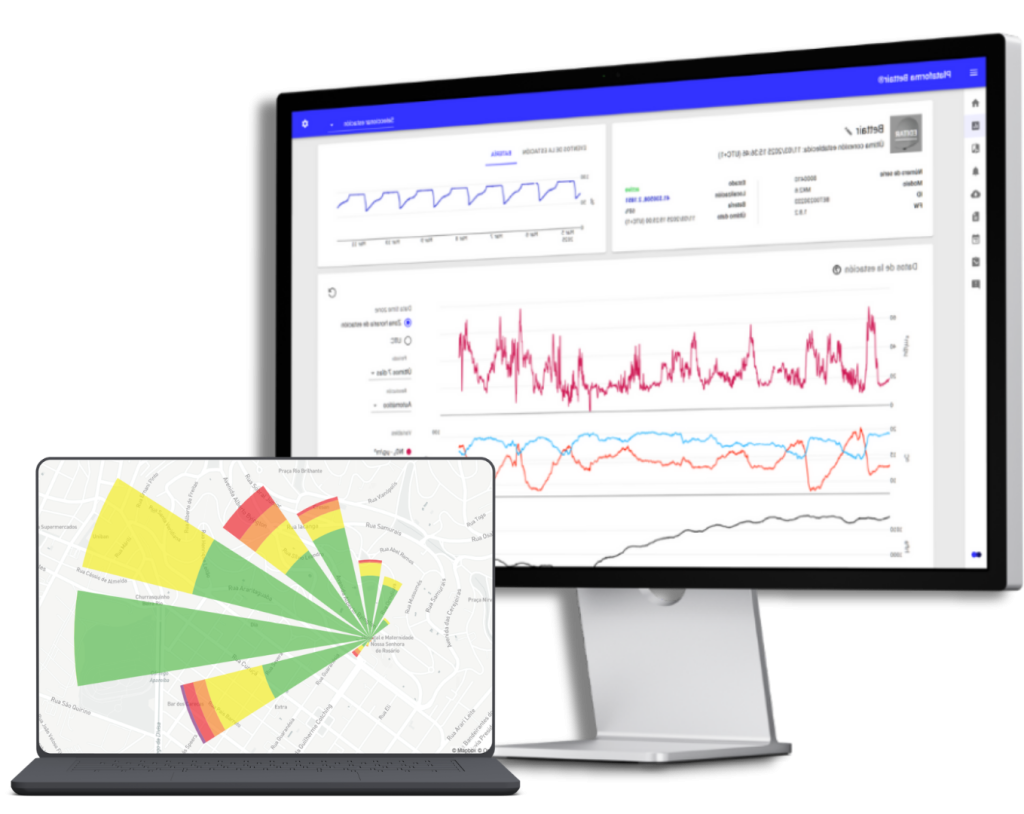
Bettair Platform
Centralize and visualize environmental measurements from distributed Bettair nodes.
Georeferenced data
Visualize measurements by location to understand spatial differences.
Historical trends
Use time-series information to review changes and investigate episodes.
API integration
Platform and API capabilities support integration with wider digital environments.
Why Bettair for Landfills & Waste Management
Objective continuous data; episode correlation; improved investigation capability; environmental traceability.
Continuous data
Build a time-linked environmental record.
Distributed coverage
Place monitoring where conditions and concerns vary.
Multiparameter monitoring
Combine particles, gases, noise and environmental variables.
Actionable evidence
Support investigation and environmental management.
Applications for Landfills & Waste Management
Use Bettair where landfills & waste management operations require continuous environmental visibility.
Odor Monitoring
Landfill Environmental Monitoring
Perimeter Environmental Monitoring
Environmental Noise Monitoring
Technical Parameters
Select parameters according to the environmental objectives of the landfills & waste management project.

Particles
✓ PM1
✓ PM2.5
✓ PM10
Particles

Gases
✓ H2S ✓ NH3 ✓ CH4
✓ VOC ✓ CO2 ✓ NO2
✓ CO and More
Gases

Meteorology
✓ Temperature
✓ Humidity
✓ Pressure
✓ Wind Speed
✓ Wind Direction
and more
Meteorology

Environmental Noise
✓ Environmental Noise
✓ Continuous acoustic monitoring
✓ Environmental noise analysis
Environmental Noise
✓ PM1
✓ PM2.5
✓ PM10
✓ H2S ✓ NH3 ✓ CH4
✓ VOC ✓ CO2 ✓ NO2
✓ CO and More
✓ Temperature
✓ Humidity
✓ Pressure
✓ Wind Speed
✓ Wind Direction
and more
✓ Environmental Noise
✓ Continuous acoustic monitoring
✓ Environmental noise analysis
Available parameters depend on the selected Bettair configuration and the monitoring objectives of the project.
Monitoring Strategy for Landfills & Waste Management
Define objectives, parameters, locations and the evidence required before deployment.
1
Define objectives
Identify the environmental questions and operating conditions relevant to landfills & waste management.
2
Select parameters
Choose particles, gases, noise and environmental variables according to the monitoring objective.
3
Plan locations
Position nodes across operational areas, boundaries and sensitive receptors.
4
Review and act
Use trends and episode information to support investigation and environmental-management decisions.
The result is a monitoring strategy designed around
the project’s real environmental challenges.
Evidence for Environmental Management
Continuous monitoring creates traceable environmental information for investigation and management.
24+
Continuous monitoring
Time-series measurements provide a persistent environmental record.
7+
Gas selection
Bettair configurations can select multiple gases according to project needs.
API
Data integration
Platform and API capabilities support integration with digital environments.
Technical Evidence
Bettair technical monitoring evidence
Use documented Bettair technical evidence to support the monitoring approach; sector-specific project claims should only be added when independently verified.
Bettair devices
4 Nodes
Project location
Baena, Spain
Stakeholder
Municipality of Baena
Project date
2023
More Environmental Monitoring Projects
Explore related Bettair applications and sectors to compare monitoring approaches.
Frequently Asked Questions About Landfills & Waste Management
Common questions about environmental monitoring in landfills & waste management projects.
Can Bettair monitor H₂S and NH₃?
Yes. H₂S and NH₃ are among the gases that can be monitored with Bettair configurations. These measurements can be particularly relevant when investigating odor-related episodes around waste facilities and wastewater treatment environments.
Can Bettair help investigate odor episodes?
Continuous H₂S, NH₃ and other relevant measurements can provide time-series information that helps environmental teams investigate when episodes occur and relate observations to environmental conditions such as wind direction and speed.
Can Bettair monitor particulate matter around waste facilities?
Yes. Bettair can continuously monitor PM1, PM2.5 and PM10 at selected locations around waste facilities. These measurements can help identify spatial and temporal changes in particulate concentrations.
Where should Bettair nodes be placed around a landfill?
Node locations should be defined according to the monitoring objective, considering operational areas, facility boundaries, nearby receptors and locations where odor or other environmental concerns have been reported.
Can Bettair monitor environmental noise at waste facilities?
Yes. Environmental noise can be monitored alongside particles, gases and environmental variables, providing additional information about conditions around waste-management operations and nearby receptors.
Can meteorological data help investigate odor episodes?
Yes. Wind direction and speed can provide important context when analysing H₂S, NH₃ and other measurements during odor-related episodes, helping environmental teams investigate when and under what conditions events occur.
Have a specific monitoring requirement for your sector?
Related Content
Explore related sectors and applications to continue through the environmental monitoring ecosystem.
Oil & Gas
Both environments can involve gas-related monitoring, changing site conditions and investigation of episodic events.
Explore ApplicationsEnvironmental Consulting & Monitoring
Waste facilities commonly rely on environmental consultants for monitoring, investigations and reporting.
Explore ParametersSmart Cities
Waste facilities form part of urban environmental management and can contribute data to municipal strategies.
Explore Case StudiesLooking for a monitoring solution for another sector?
Looking for a monitoring solution for another sector?
GET STARTED
Let's evaluate my facility
Tell us about your odor issue and we will assess the most suitable monitoring approach.
Define the parameters that matter for your project
Select monitoring locations and network strategy
Discuss the environmental data your team needs