
Environmental Monitoring for Oil & Gas Operations
Bettair can be configured for relevant gases and deployed at strategic locations around processing, storage and infrastructure areas. Continuous measurements of VOC-related parameters, CH4 and other selected gases can be combined with particles, noise and environmental variables. This creates information for investigating episodes, understanding spatial patterns and supporting environmental management.
Environmental Monitoring Challenges in Oil & Gas
Oil and Gas facilities contain multiple potential sources across processing, storage, transfer and supporting infrastructure. VOCs, EVOC, pVOC, CH4, H2S, NO2, SO2 and other gases may vary with operations and wind. Limited spatial coverage can make episodes difficult to investigate, while environmental teams face operational, community and regulatory reporting pressures.
Refinery leaks do not wait for scheduled audits. Volatile vapors, methane, and toxic sulfur bleed from worn seals across vast tank farms. Shifting winds carry pungent plumes straight toward neighboring fence lines. A few handheld sniffers cannot track moving clouds day and night. Bettair rings your site perimeter with continuous sensing to catch leaks before fines hit.
Changing environmental conditions
Environmental conditions can vary by activity, location and meteorology, making isolated measurements difficult to interpret.
Complex operational environments
Oil & Gas sites can contain multiple sources, receptors and operating conditions that require distributed visibility.
Need for continuous evidence
Time-linked data helps investigate episodes, compare locations and support environmental management with traceable evidence.
What to Monitor
Configure the monitoring network around the environmental objectives of the oil & gas project.
1
Particulate Matter
PM1, PM2.5 and PM10 measurements provide continuous visibility into particulate conditions around facilities, operational areas and perimeter locations within Oil & Gas environments.
2
Gases & Emissions
Configurable gas measurements support monitoring objectives involving VOCs, methane and other relevant gases, helping characterize changing conditions around Oil & Gas operations and potential emission sources.
3
Environmental Noise
Continuous acoustic monitoring helps characterize environmental noise associated with operational equipment, industrial activity, logistics and other relevant sources around Oil & Gas facilities.
4
Environmental Conditions
Temperature, humidity, pressure and wind measurements provide important context for interpreting gas and particulate measurements and understanding dispersion conditions around operational areas.
How Bettair Works
Bettair can be configured for relevant gases and deployed at strategic locations around processing, storage and infrastructure areas. Continuous measurements of VOC-related parameters, CH4 and other selected gases can be combined with particles, noise and environmental variables. This creates information for investigating episodes, understanding spatial patterns and supporting environmental management.
Distributed nodes
Place nodes at operational areas, boundaries and sensitive locations according to the monitoring objective for oil & gas.
Continuous measurements
Collect time-series environmental data to identify changes, compare locations and investigate episodes.
Contextual environmental data
Combine particles, selected gases, noise and environmental variables where relevant.
Continuous Environmental Monitoring
Continuous environmental information; spatial monitoring; episode investigation; improved environmental visibility.
See changes over time
Compare locations
Investigate episodes
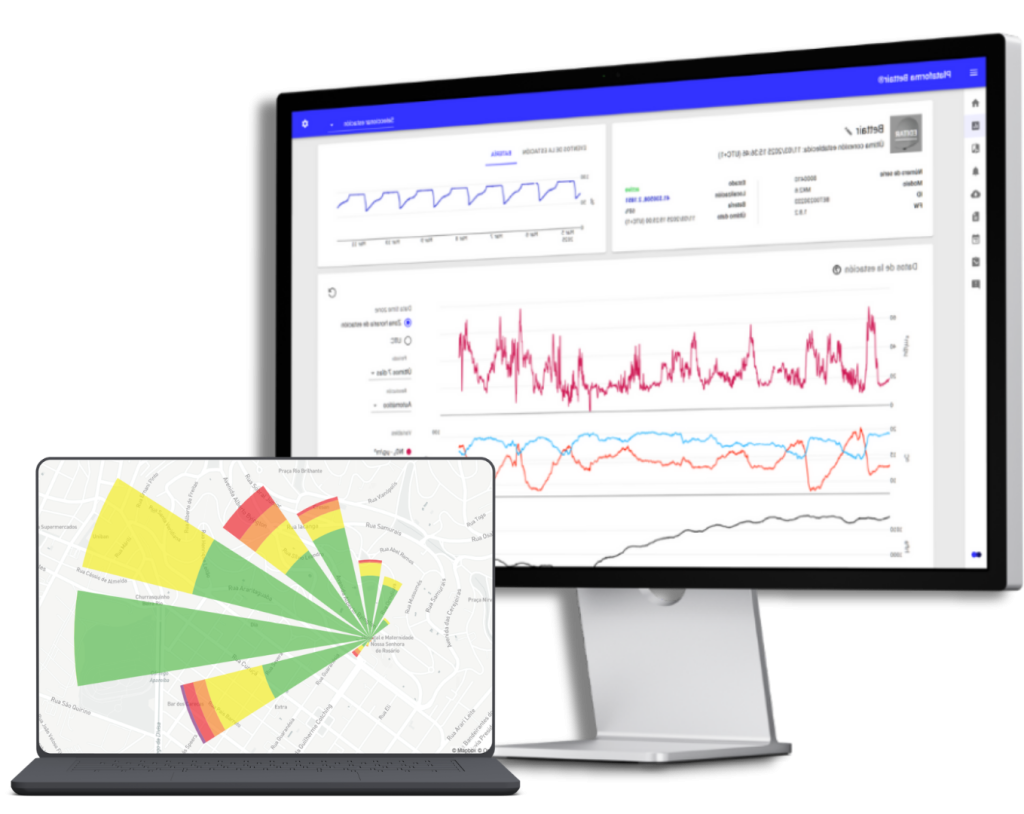
Bettair Platform
Centralize and visualize environmental measurements from distributed Bettair nodes.
Georeferenced data
Visualize measurements by location to understand spatial differences.
Historical trends
Use time-series information to review changes and investigate episodes.
API integration
Platform and API capabilities support integration with wider digital environments.
Why Bettair for Oil & Gas
Continuous environmental information; spatial monitoring; episode investigation; improved environmental visibility.
Continuous data
Build a time-linked environmental record.
Distributed coverage
Place monitoring where conditions and concerns vary.
Multiparameter monitoring
Combine particles, gases, noise and environmental variables.
Actionable evidence
Support investigation and environmental management.
Applications for Oil & Gas
Use Bettair where oil & gas operations require continuous environmental visibility.
Oil & Gas Emissions Monitoring
Industrial Emissions Monitoring
Perimeter Environmental Monitoring
Environmental Noise Monitoring
Technical Parameters
Select parameters according to the environmental objectives of the oil & gas project.

Particles
✓ PM1 ✓ PM2.5 ✓ PM10
Particles

Gases
✓ VOC ✓ EVOC ✓ pVOC
✓ CH₄ ✓ H₂S ✓ NO₂
✓ NO ✓ CO ✓ CO₂
✓ SO₂ ✓ O₃ ✓ NH₃
✓ HCl ✓ CH₂O ✓ HF
✓ HCN
Gases

Meteorology
✓ Temperature
✓ Humidity
✓ Pressure
✓ Wind Speed
✓ Wind Direction
and more
Meteorology

Environmental Noise
✓ Environmental Noise
✓ Continuous acoustic monitoring
✓ Environmental noise analysis
Environmental Noise
✓ PM1 ✓ PM2.5 ✓ PM10
✓ VOC ✓ EVOC ✓ pVOC
✓ CH₄ ✓ H₂S ✓ NO₂
✓ NO ✓ CO ✓ CO₂
✓ SO₂ ✓ O₃ ✓ NH₃
✓ HCl ✓ CH₂O ✓ HF
✓ HCN
✓ Temperature
✓ Humidity
✓ Pressure
✓ Wind Speed
✓ Wind Direction
and more
✓ Environmental Noise
✓ Continuous acoustic monitoring
✓ Environmental noise analysis
Available parameters depend on the selected Bettair configuration and the monitoring objectives of the project.
Monitoring Strategy for Oil & Gas
Define objectives, parameters, locations and the evidence required before deployment.
1
Define objectives
Identify the environmental questions and operating conditions relevant to oil & gas.
2
Select parameters
Choose particles, gases, noise and environmental variables according to the monitoring objective.
3
Plan locations
Position nodes across operational areas, boundaries and sensitive receptors.
4
Review and act
Use trends and episode information to support investigation and environmental-management decisions.
The result is a monitoring strategy designed around
the project’s real environmental challenges.
Evidence for Environmental Management
Continuous monitoring creates traceable environmental information for investigation and management.
24+
Continuous monitoring
Time-series measurements provide a persistent environmental record.
7+
Gas selection
Bettair configurations can select multiple gases according to project needs.
API
Data integration
Platform and API capabilities support integration with digital environments.
Technical Evidence
Bettair technical monitoring evidence
Use documented Bettair technical evidence to support the monitoring approach; sector-specific project claims should only be added when independently verified.

Bettair devices
N/A
Project location
Global
Stakeholder
Bettair
Project date
N/A
More Environmental Monitoring Projects
Explore related Bettair applications and sectors to compare monitoring approaches.
Frequently Asked Questions About Oil & Gas
Common questions about environmental monitoring in oil & gas projects.
Which gases are relevant for Oil & Gas environmental monitoring?
Depending on the facility and monitoring objective, relevant parameters can include VOC, EVOC, pVOC, CH₄, H₂S, NO₂, SO₂ and CO. The final configuration should reflect the processes and potential emission sources present.
Can Bettair monitor VOC-related emissions?
Bettair can be configured with VOC-related sensing technologies. Monitoring strategy, sensor configuration and interpretation should be defined according to the compounds of interest, the installation and applicable environmental requirements.
Which gases are relevant for Oil & Gas environmental monitoring?
Depending on the facility and monitoring objective, relevant parameters can include VOC, EVOC, pVOC, CH₄, H₂S, NO₂, SO₂ and CO. The final configuration should reflect the processes and potential emission sources present.
Can Bettair monitor particulate matter at Oil & Gas facilities?
Yes. Bettair can continuously monitor PM1, PM2.5 and PM10 alongside selected gases, allowing environmental teams to evaluate multiple parameters within a distributed monitoring network.
Can Bettair monitor environmental noise at Oil & Gas facilities?
Yes. Environmental noise can be monitored alongside air-quality parameters where operational activity and nearby receptors make acoustic information relevant.
Can meteorological data help interpret Oil & Gas monitoring results?
Yes. Wind speed and direction, together with temperature, humidity and pressure, can provide useful context when analysing changes in gas and particulate measurements around operational areas.
Have a specific monitoring requirement for your sector?
Related Content
Explore related sectors and applications to continue through the environmental monitoring ecosystem.
Gas Stations & Fuel Retail
Both environments involve fuel handling and VOC-related monitoring, with different operational scale and objectives.
Explore ApplicationsManufacturing & Industry
Industrial processes share the need for distributed monitoring of gases, particles, noise and changing conditions.
Explore ParametersMining & Extractives
Large industrial and extractive sites share perimeter-monitoring challenges around emissions, dust and receptors.
Explore Case StudiesLooking for a monitoring solution for another sector?
Looking for a monitoring solution for another sector?
GET STARTED
Discuss emissions monitoring for my Oil & Gas facility
Review the relevant gases, locations and monitoring objectives for your facility.
Define the parameters that matter for your project
Select monitoring locations and network strategy
Discuss the environmental data your team needs