

Bettair Wins 9 AIRLAB 2025 Awards, Reinforcing Its Global Leadership in Air Quality Monitoring

Independently evaluated across three continents and four different monitoring environments, Bettair earns 9 AIRLAB awards, backed by real-world deployments in 100+ cities across 30+ countries

Awards
0
Testing environments
0
Continents
0
Cities
+ 0
Countries
+ 0

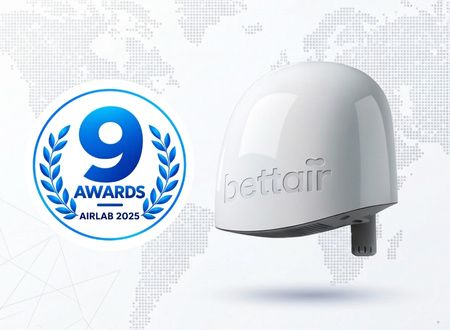
Bettair has achieved an outstanding result at the fifth edition of the AIRLAB Microsensors Challenge, organized by AIRLAB Solutions and Airparif: 9 awards following months of independent evaluation under real-world conditions.

The 2025 Challenge evaluated 47 microsensor models from Africa, North America, Asia and Europe, exposing participating technologies to different climates, pollution levels and emission sources.

Outdoor evaluations were conducted in Paris, France; Accra, Ghana; and Bangalore, India. For the first time, AIRLAB also introduced a completely different monitoring environment: underground railway stations in Île-de-France.

Bettair achieved the best overall Outdoor Air Monitoring performance in France, Ghana and India, as well as the best overall performance in the underground railway environment.

Independent validation that goes beyond accuracy

Accuracy is fundamental in air quality monitoring. But real-world performance requires more.

AIRLAB’s methodology evaluates different dimensions of microsensor performance and, depending on the application category, considers factors including accuracy, usefulness, usability, cost and environmental footprint.

Temperature, humidity, pollutant concentrations, emission sources and local environmental conditions can all affect the performance of monitoring technologies.

That is why Bettair’s results are particularly significant: the same technology achieved outstanding performance across different continents, climates and applications.

For cities, environmental agencies, industrial operators, engineering companies and infrastructure managers, this type of independent evaluation provides an important additional level of confidence when selecting technology for real-world monitoring projects.

100+ cities. 30+ countries. Proven in the real world.

Independent validation is one part of the story.

The other happens every day in cities and projects around the world.

Today, Bettair technology is deployed in more than 100 cities across more than 30 countries, supporting air quality monitoring projects under widely different environmental and operational conditions.


From Barcelona and Rome to Madrid, São Paulo and New York City, Bettair is providing high-resolution environmental information and complementing traditional monitoring networks with significantly greater spatial coverage.

This international footprint is especially important when considered alongside the AIRLAB results.

Independently validated. Globally deployed. Proven in the real world.

Bettair is not simply a technology performing well in an international testing program. It is a monitoring platform with years of field experience across cities, transportation systems, infrastructure, construction and industrial environments.

Proven in New York City

For the U.S. market, New York City provides a particularly relevant example.

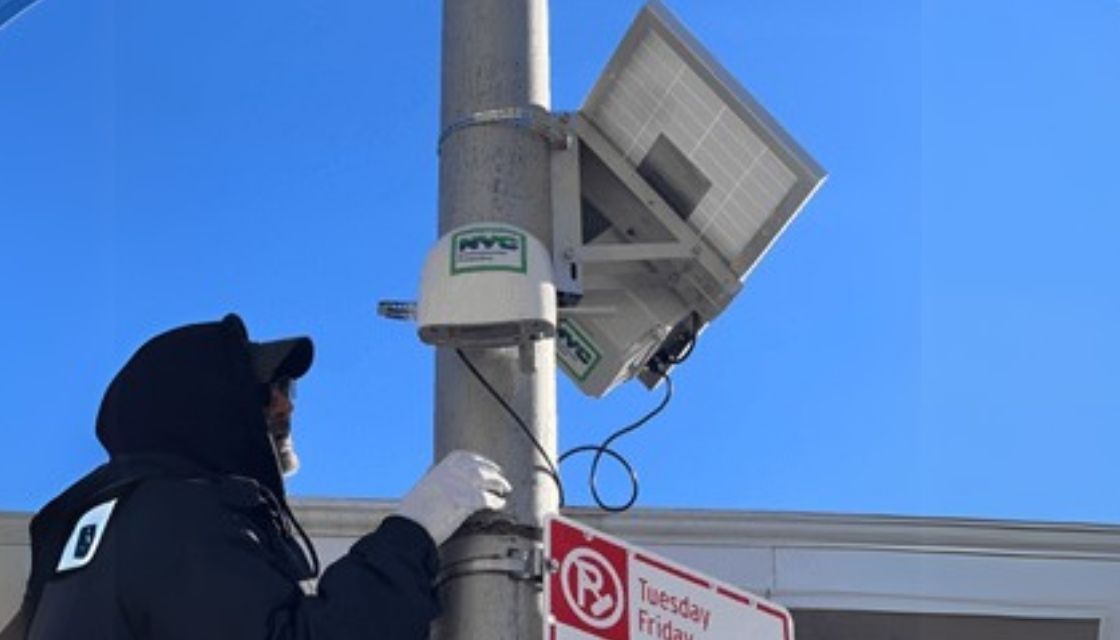
dnota Air Quality Corp. deployed Bettair technology in Queens and the Bronx as part of New York City’s Environmental Tech Lab, providing the opportunity to evaluate the technology under real urban conditions.

New York illustrates exactly why high-resolution monitoring matters.


Traffic, buildings, construction, infrastructure and multiple emission sources can create significant variations in air quality over relatively short distances.

Reference monitoring stations remain essential, but distributed networks can complement them by providing a much more detailed picture of where, when and how air quality changes across the urban environment.

Bettair’s AIRLAB 2025 results now add further independent international validation to that real-world U.S. experience.

From New York to cities around the world

NYC is part of a much broader international track record.

In Barcelona and its metropolitan area, Bettair technology supports distributed monitoring networks across multiple municipalities, including deployments associated with Low Emission Zones.

In Rome, Bettair was deployed as part of the European MappingAir project, demonstrating high-resolution urban air quality monitoring in one of Europe’s largest and most complex cities.

In Madrid, Bettair has been used in major infrastructure projects, including environmental monitoring during construction of the new MADRING Formula 1 circuit, where air quality and environmental noise were monitored around the IFEMA area.

In São Paulo, dnota and Bettair continue to expand their presence in Latin America through the city’s innovation ecosystem and the development of new environmental monitoring applications.

Together with many other deployments, these projects have helped Bettair reach 100+ cities across 30+ countries

Different climates. Different emission sources. Different applications.

One monitoring technology.

One platform. Multiple applications.

The 2025 AIRLAB results also reinforce Bettair’s potential far beyond traditional Smart City applications.

Cities & communities

expanding spatial coverage and understanding neighborhood-level air quality.

Industry & fenceline monitoring

providing high-resolution environmental information around industrial facilities and neighboring communities.

Construction & infrastructure

monitoring environmental impacts throughout major projects.

Ports & logistics

understanding complex environments where vessels, trucks, machinery and multiple emission sources coexist.

Airports & transportation infrastructure

expanding environmental intelligence around complex transportation environments.

Rail & subway systems

an application further reinforced by Bettair's best overall performance in AIRLAB's new underground railway scenario.

Schools & campuses

providing localized environmental information where people study, work and live.

Major events

monitoring environmental conditions before, during and after large-scale activities.

The common objective is the same: more trusted environmental data, in more locations, to support better decisions.

From reference-grade instrumentation to high-resolution distributed networks

At dnota Air Quality Corp., we believe the future of air quality monitoring is not about choosing between reference-grade instrumentation and distributed monitoring.

It is about combining them.

Reference monitoring stations remain essential for regulatory monitoring, metrological traceability and the highest levels of measurement quality.

Distributed technologies such as Bettair complement those stations by multiplying measurement points and providing the spatial resolution required to understand what is happening between traditional monitoring locations.

This integrated approach is at the core of dnota’s air quality strategy.

Our portfolio combines Thermo Scientific analyzers for reference monitoring stations, Digitel particulate matter samplers and Synspec gas chromatography solutions, together with Bettair high-resolution distributed monitoring technology.

By integrating these technologies with meteorology, communications, data platforms, modeling, analytics and Artificial Intelligence, air quality networks can evolve from simply measuring pollution toward understanding and anticipating it.

Measure. Understand. Predict. Act.

9 awards. 100+ cities. 30+ countries.

For Bettair and dnota Air Quality Corp., the 9 AIRLAB 2025 awards represent much more than international recognition.

They provide new independent validation for a technology developed over years, tested under widely different environmental conditions and already operating in real-world projects around the globe.

  • 9 AIRLAB 2025 awards

  • Best overall performance in France, Ghana and India.

  • Best overall performance in underground railway stations

  • 100+ cities.

  • 30+ countries

  • Multiple sectors and applications.

Independently validated. Globally deployed. Proven in the real world.

Because the future of air quality monitoring isn’t simply about adding more sensors.

It’s about having trusted data where it matters — and turning that data into better decisions.

Ready to expand your air quality monitoring capabilities?

Talk to dnota Air Quality Corp. about your next monitoring project — from reference-grade instrumentation to high-resolution distributed networks for cities, industry, transportation and infrastructure.